
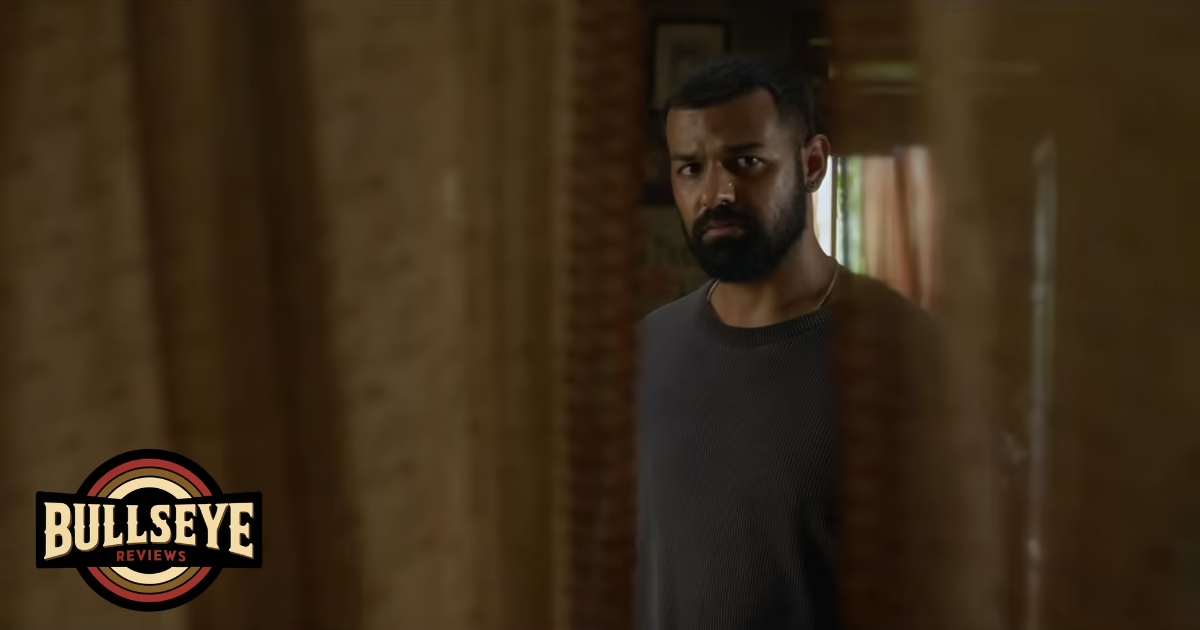
Rahul Sadasivan’s Dies Irae (2025), starring Pranav Mohanlal, transforms stillness into terror in a visually rich, psychologically layered horror experience. With meticulous sound design, restrained performances, and an unsettling sense of realism, it’s a haunting tale that lingers long after the credits roll.
A Director Who Understands Fear, Not Just Fright
With Dies Irae, Rahul Sadasivan once again proves that he’s not here to merely startle you — he wants to disturb you. Unlike many horror films that rely on exaggerated visuals or gimmicky scares, this one derives terror from silence, light, and the unseen. Every creak, every flicker of light, and even the passing wind becomes a character that whispers unease.
Sadasivan’s filmmaking approach balances style and storytelling. The horror here isn’t just supernatural — it’s psychological, creeping up from familiar corners of comfort and privilege.
The Story: Haunted by More Than Ghosts
The film follows Rohan (Pranav Mohanlal), a young architect from an affluent family, whose life spirals after the mysterious suicide of his schoolmate, Kani. A simple visit to her home opens the floodgates of terror, unraveling dark secrets that connect his past and present.
While the premise seems conventional, the screenplay subverts expectations. The narrative shifts between horror and mystery, slowly revealing deeper emotional and moral undertones. The Latin title — Dies Irae, meaning “Day of Wrath” or “Judgment Day” — ties into a subtle reflection on guilt and retribution that lingers even after the final frame.
Performances that Amplify the Dread
Pranav Mohanlal delivers one of his most mature performances yet. His restrained expressions, deliberate silence, and vulnerable moments ground the film’s supernatural chaos in emotional realism. Gibin Gopinath shines as his quiet yet perceptive companion, while Jaya Kurup and Arun Ajikumar bring authenticity to their supporting roles.

Each actor contributes not by overplaying fear but by embodying it — allowing the audience to feel every ounce of dread they experience.
Sound, Silence, and Shadows — The Real Stars
Christo Xavier’s music and sound design elevate Dies Irae to a sensory experience. The score isn’t just background — it breathes life into the shadows. Every sound, whether it’s a gust of wind or the faint thud of footsteps, becomes part of the narrative rhythm.
The film’s technical finesse — from its crisp editing to its controlled lighting — builds tension without chaos. The white interiors of Rohan’s mansion act as both a sanctuary and a prison, amplifying the eeriness with minimalist elegance.
A Horror That Stays After the Lights Come On
Dies Irae succeeds because it respects its audience’s intelligence. It doesn’t spoon-feed scares or explain away the mystery. Instead, it leaves room for interpretation, inviting viewers to think about what truly haunts Rohan — and perhaps, themselves.
While a few subplots could have used more closure, the film’s emotional payoff and craftsmanship make it one of the most rewarding horror experiences Malayalam cinema has produced in recent years.
Bullseye Rating:★★★½ (3.5/5 stars)
An intelligent, immersive, and emotionally resonant horror experience that proves Malayalam cinema continues to lead the genre in both craft and courage.
Dies Irae in currently in theatres.